In 2026, South Korea launched a pilot container shipping project via the Northern Sea Route (NSR), sending the container vessel Panstar Acro to Europe. The main objective of the voyage is to gain practical experience in operating a container ship on the Arctic route between Asia and Europe.
This review is based on AIS data provided by the Kpler MarineTraffic platform and information from open sources as of 9 September 2026, 11:00 UTC.
Vessel and Voyage Preparations
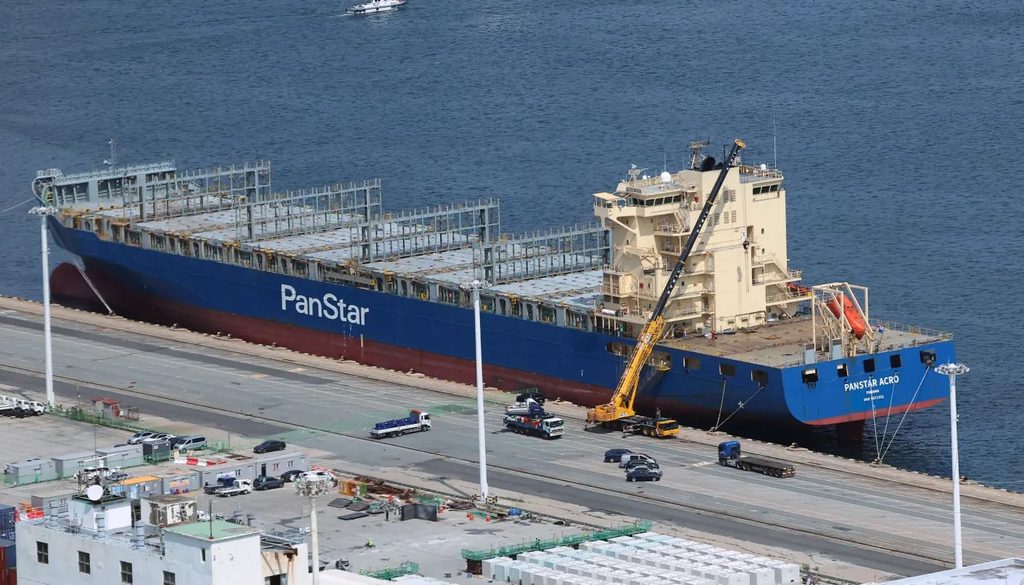
For the project, South Korean operator PanStar acquired the container vessel Panstar Acro (IMO 9571313), previously operating under the name HMM Mombasa. Built in 2011, the vessel has an overall length of approximately 212 metres and a container capacity of about 2,758 TEU. The vessel is classed by Korean Register and holds a valid Polar Certificate. The exact ice-class notation has not been publicly confirmed.
Panstar Acro berthed in Busan ahead of its Arctic voyage. Source: Yonhap News Agency.
Authorization to navigate within NSR waters was issued by the NSR Administration on 17 August 2026. In addition, on 8 September, the NSR Administration published information on the issuance of another permit, the validity period of which had not yet begun at the time of writing. This may indicate preparations for a return transit via the NSR during the current navigation season.
The organizers initially expected cargo volumes of approximately 1,300 TEU, although actual utilization was lower. The vessel departed with approximately 737 loaded containers and 100 empty containers, equivalent to about 837 TEU. Reported cargoes included chemical products, automotive components, metal products and used vehicles, supplied by approximately 85 cargo owners. The lower cargo volume may have resulted from the limited time available for vessel preparation, regulatory approvals and cargo bookings ahead of the Arctic navigation season.
NSR Transit
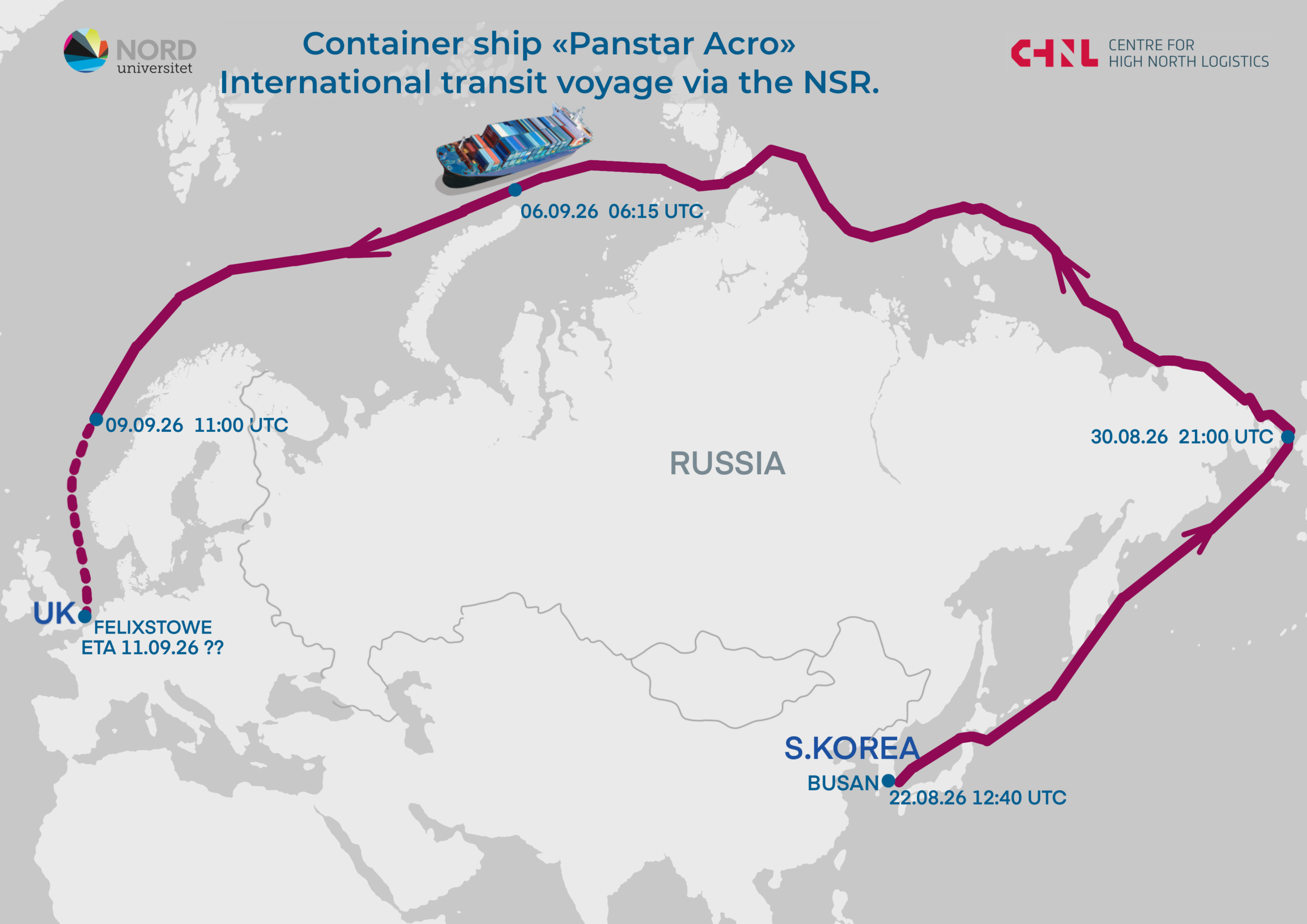
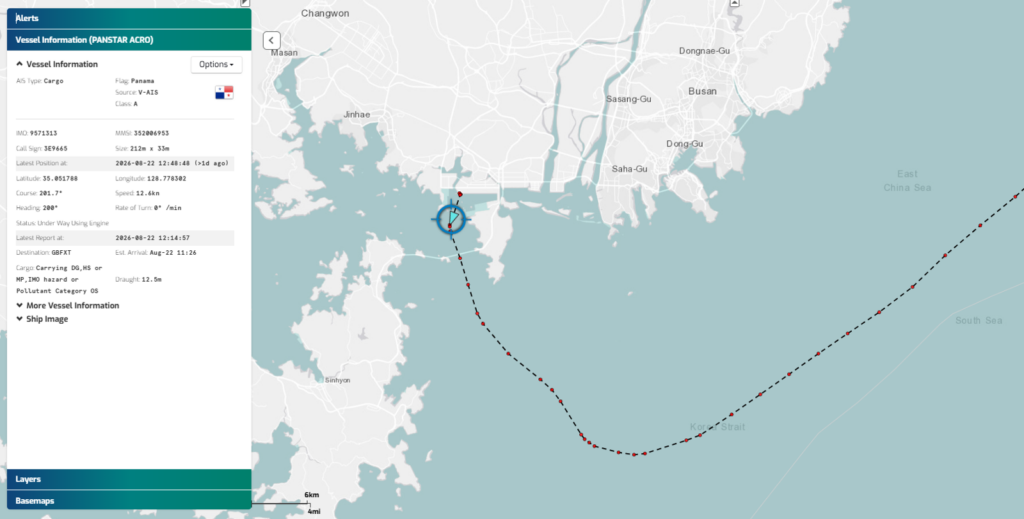
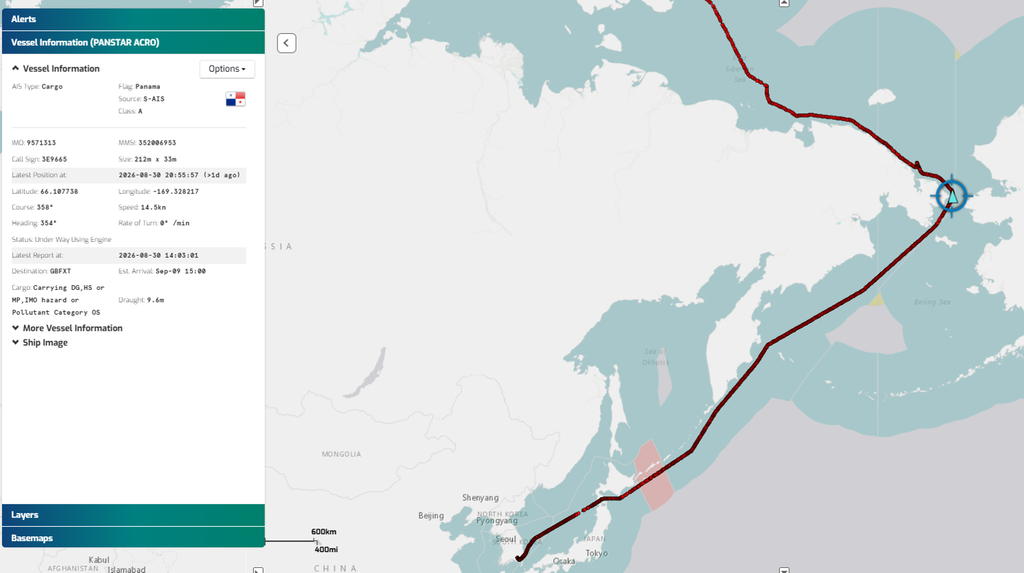
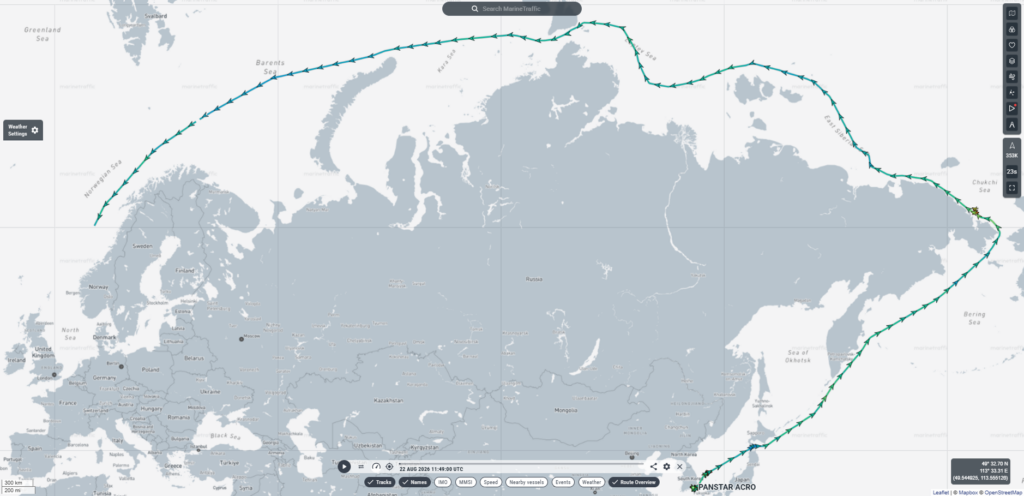
According to AIS data, Panstar Acro departed the Port of Busan on 22 August 2026 at 12:40 UTC and reached the eastern boundary of the NSR on 30 August 2026 at 21:00 UTC after covering approximately 3,068 nautical miles at an average speed of 15.3 knots.
Maps showing the vessel’s track from departure in Busan to entry into the NSR. Source: Kpler, Spire ShipView
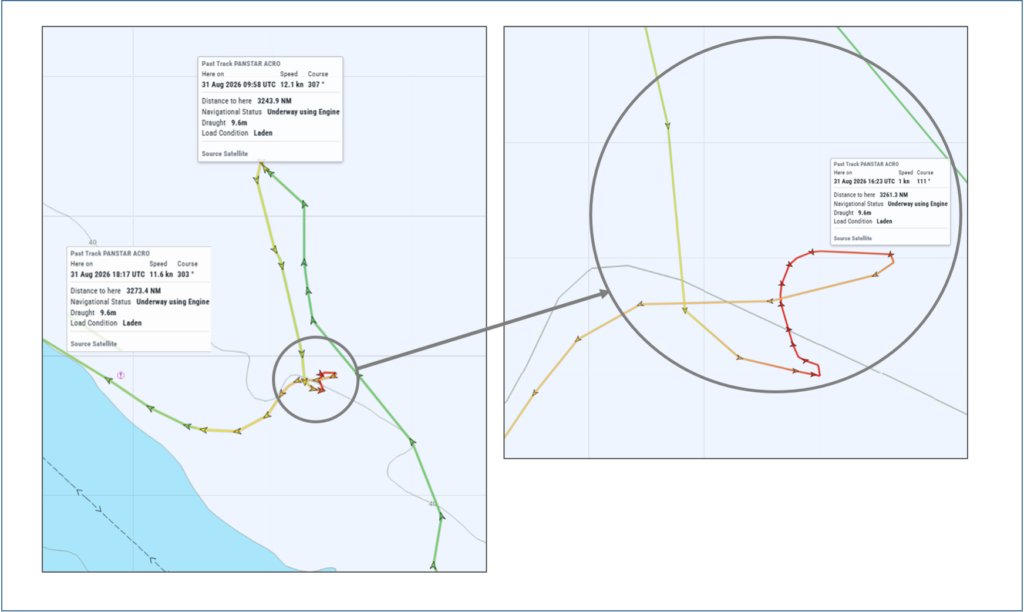
During the early stage of the transit along the Chukchi coast on 31 August, the vessel temporarily deviated north of its previous track, reduced speed and spent several hours manoeuvring before returning to the coastal route later the same day. During this period, Panstar Acro continued making limited westbound progress and covered approximately 16 nautical miles, with the effective impact on transit time estimated at approximately 8 hours.
Following the manoeuvre, the vessel continued westward through the NSR, passing north of the New Siberian Islands and transiting Vilkitsky Strait before proceeding towards Cape Zhelaniya, the western boundary of the NSR.
Map of the vessel’s maneuvers in the Chukchi Sea on 31 August 2026. Source: Kpler, MarineTraffic.
AIS analysis indicates that vessel speed remained within the 15-17 knot range for most of the transit, with a recorded maximum of approximately 17.9 knots.
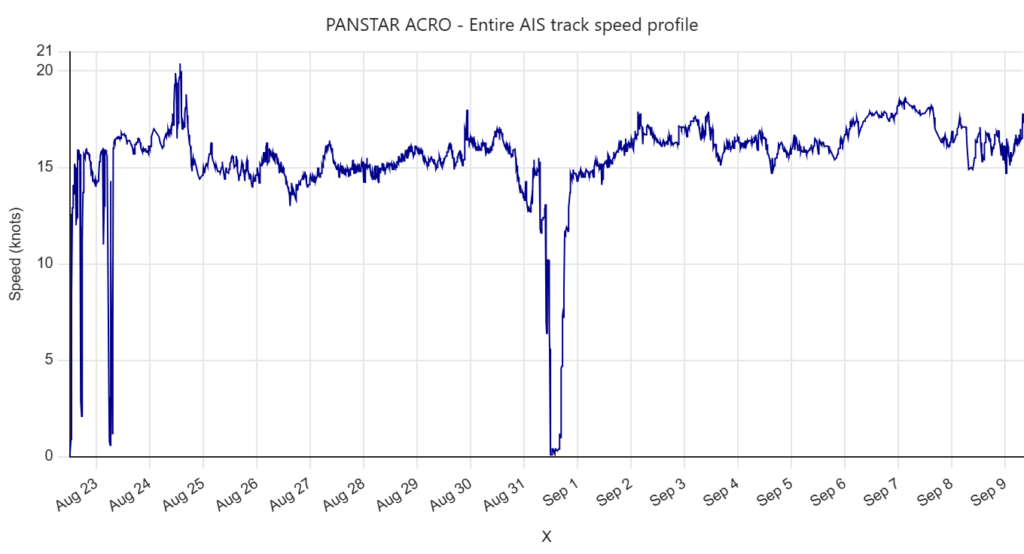
Between 30 August 2026, 21:00 UTC and 6 September 2026, 06:15 UTC, Panstar Acro covered approximately 2,320 nautical miles along the NSR. The transit was completed in approximately 6 days 10 h at an average speed of 15.1 knots.
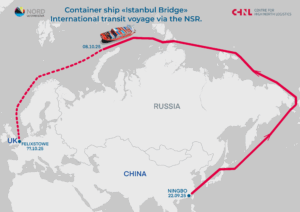
General map showing the vessel’s track during the period covered by this article. Source: Kpler, MarineTraffic.
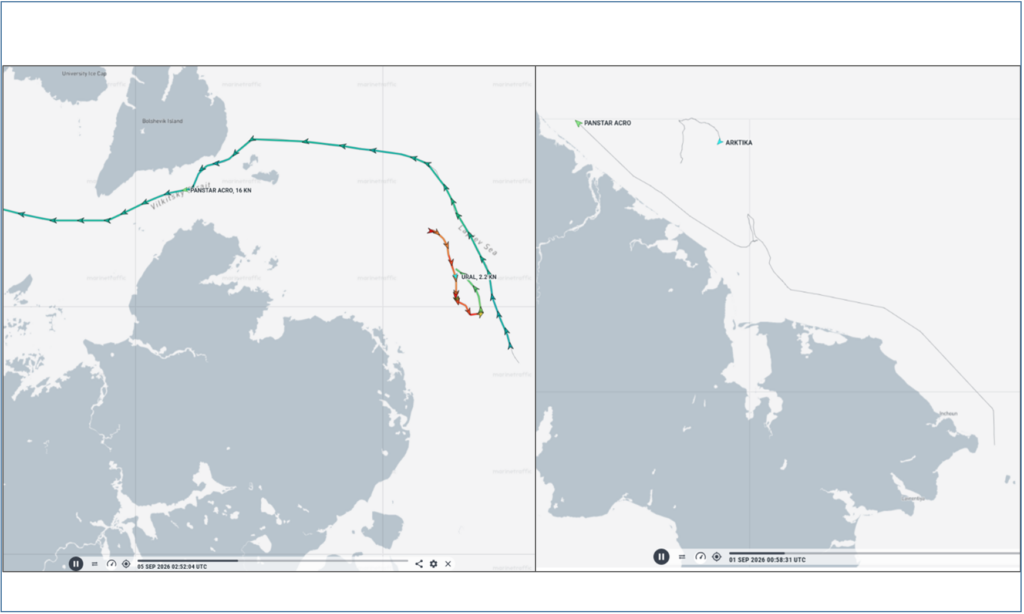
Analysis of AIS tracks also indicates that no direct icebreaker escort was provided during the voyage. Although the nuclear icebreakers Arktika and Ural were operating in the eastern and western sectors of the NSR respectively, neither vessel intersected the route of Panstar Acro.
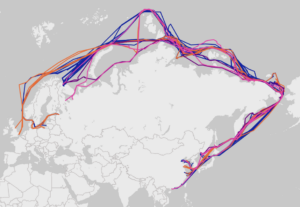
Maps showing the vessel’s route in relation to icebreakers operating in the NSR areas. Source: Kpler, MarineTraffic.
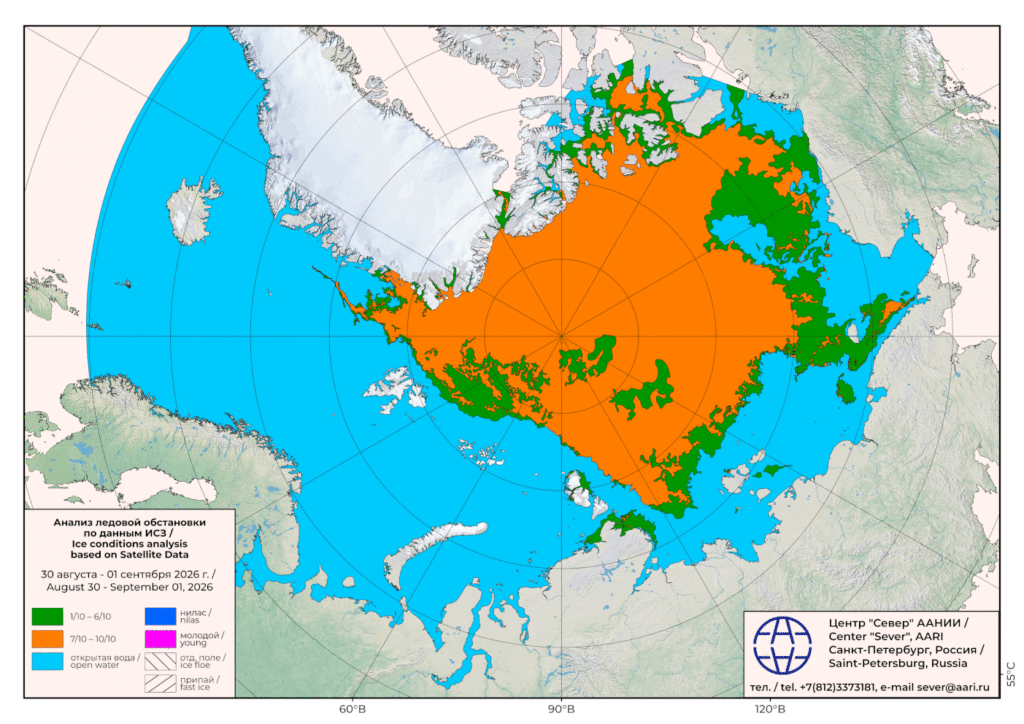
Ice conditions during the transit were generally favorable. Some residual ice remained along parts of the Chukchi coast at the beginning of the voyage.
Overview map of ice conditions along the NSR during 30 August to 1 September 2026. Source: AARI
Exit from the NSR and Voyage to Europe
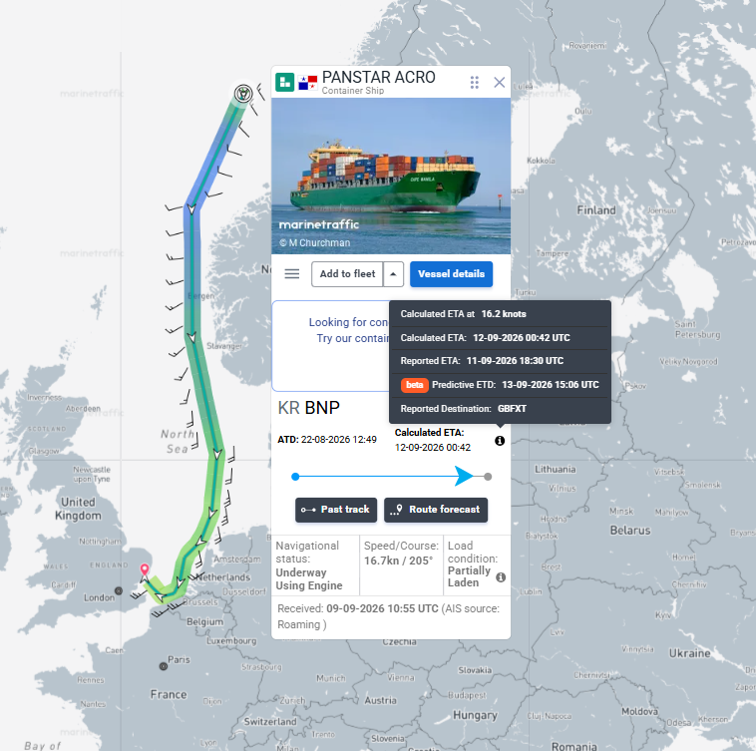
Panstar Acro exited the NSR on 6 September 2026 at 06:15 UTC and continued towards Europe. As of 9 September 2026, 11:00 UTC, the vessel was located between Bodø and Trondheim along the Norwegian coast.
Since leaving the NSR, the vessel had covered approximately 1,295 nautical miles in 3 days 5 h, corresponding to an average speed of approximately 16.9 knots.
According to AIS data, Panstar Acro is expected to arrive in Felixstowe on 11 September 2026 at 18:30 UTC. As of 9 September, approximately 940 nautical miles remained to the destination. Based on the vessel’s current speed of 16.8-16.9 knots, the estimated arrival time is approximately 19:00 UTC on 11 September, closely matching the reported ETA.
The voyage from Busan to the first European port is therefore expected to take approximately 20 days 6 h.
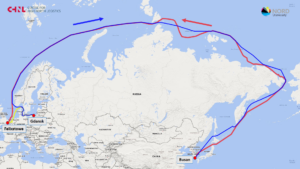
Estimated vessel track to the port of destination. Source: Kpler, MarineTraffic.
Plans for the Return Voyage
As of early September, PanStar had already opened commercial bookings for the return leg of PANSTAR ACRO / Voyage 001E from Europe to South Korea. The published schedule includes European calls at Felixstowe, Rotterdam, Hamburg and Gdansk, followed by a planned arrival at Busan New Port on 7 October 2026.
Conclusion
As of 9 September 2026, Panstar Acro had successfully completed its NSR transit and was continuing towards its first European port of call. During the Arctic passage, the vessel covered approximately 2,320 nautical miles in 6 days 10 h at an average speed of 15.1 knots, representing a commercially competitive transit speed for a container vessel operating along the route.
Table of key voyage metrics, including distance covered and average speed.
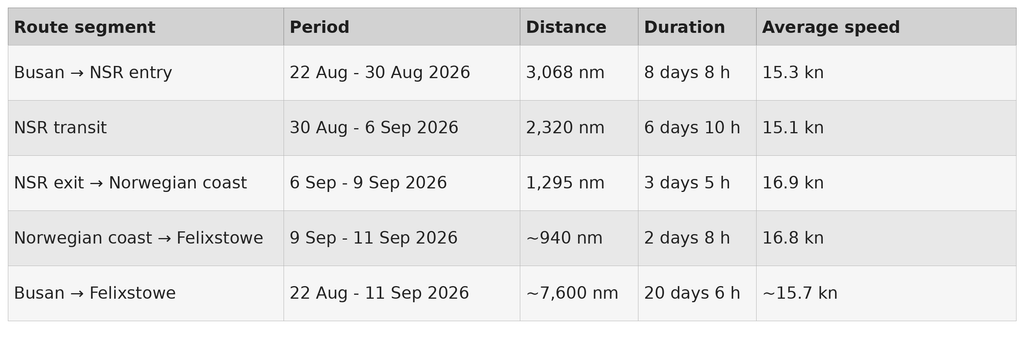
Based on the current ETA, the overall voyage from Busan to Felixstowe is expected to take approximately 20 days 6 h, highlighting one of the principal advantages attributed to Arctic routing between Northeast Asia and Northern Europe.
Particular interest now focuses on the planned return transit via the NSR later in the same navigation season. Final conclusions regarding the project will therefore only be possible after completion of the full round voyage.
This article will be updated following Panstar Acro’s arrival at its first European port of call and again after completion of the planned return voyage via the NSR.